
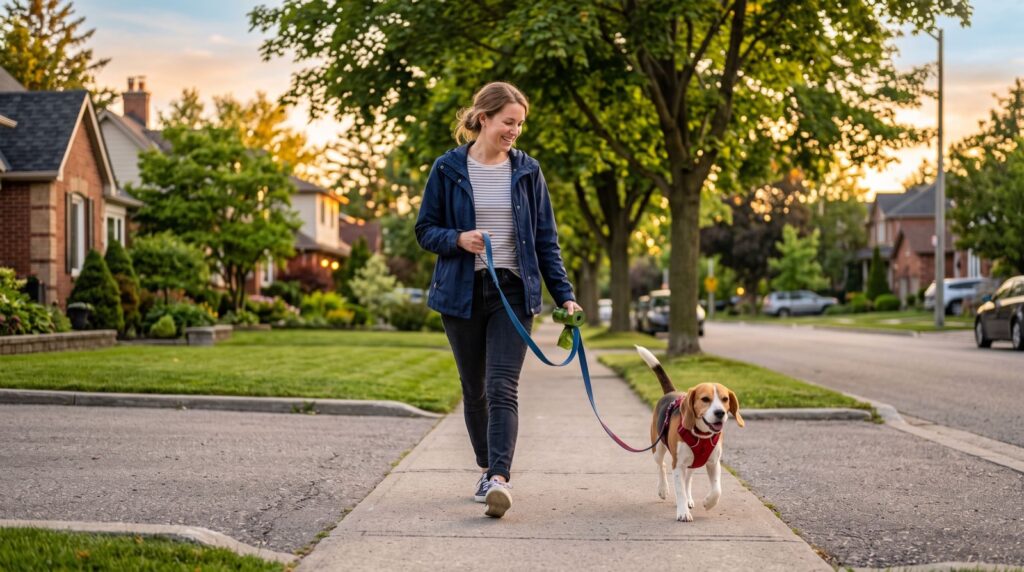
One dog leaves a manageable footprint on a household. Two dogs roughly double it. But somewhere around dog number three, something strange happens: the workload does not just add up, it multiplies. Feeding schedules collide, the yard takes a beating no single-dog owner would believe, and the daily cleanup routine that used to take five minutes starts eating half an hour. I have talked with dozens of multi-dog families, from foster homes juggling rotating packs to households that simply could not say no at the shelter, and the ones who thrive all share the same secret. They stopped relying on willpower and built systems instead.
The Math Nobody Warns You About
An average sixty-pound dog produces close to three-quarters of a pound of waste per day. Multiply that by three dogs and you are looking at over forty pounds a month landing in your yard. That volume changes the game entirely. Thin grocery-store bags tear, small bins overflow midweek, and skipping even two days creates a backlog that feels genuinely demoralizing. Multi-dog veterans handle the volume problem at the source by switching to heavy Dog duty Bags that can hold an entire day’s pickup from the whole pack without stretching, leaking, or splitting on the walk to the trash can.
System One: The Station Method
Instead of storing supplies in the garage and fetching them when needed, successful multi-dog homes create permanent stations. A covered bucket near the back door holds the scooper, spare bags, and a small bottle of hand sanitizer. A second mini-station lives by the front door for walks: leashes on hooks, bags clipped to each leash, and a towel for muddy paws. The principle is that the tools live where the task happens. When cleanup requires zero preparation, it actually gets done daily instead of weekly.
System Two: Zone Rotation for the Yard
Three or more dogs can compact and burn out a lawn shockingly fast. The fix borrowed from livestock management is rotation. Divide the yard into two or three zones using temporary garden fencing and switch the active zone every few weeks. The resting zones get watered, reseeded where needed, and left alone to recover. Families who adopt rotation report their grass survives even with four large dogs, while their neighbors with a single retriever and no system are staring at dirt by August.
System Three: The Daily Sweep, Not the Weekend Marathon
Here is the counterintuitive part: cleaning more often takes less total time. A daily two-minute sweep of the active zone means every pickup is fresh, easy to spot, and easy to lift. Waiting a week means hunting through grass for aged, crumbling messes that take three times as long per pickup. The daily sweep works best tied to an existing habit, like the after-dinner letout. While the pack does its business, you clear yesterday’s zone with a long-handled tool and a single Dog poop bag, and you are back inside before the kettle boils.
Feeding Order and Why It Affects Cleanup
Multi-dog households quickly learn that what goes in determines what comes out. Free-feeding three dogs from a communal bowl makes it impossible to know who ate what, who is off their food, and whose digestion has gone sideways. Scheduled, separated meals do two things: they let you spot a health problem within a day by noticing whose output changed, and they synchronize the pack’s bathroom schedule so cleanup happens in predictable windows rather than around the clock. Most packs settle into a rhythm within two weeks of consistent meal times.
The Gear List That Earns Its Keep
- A stand-up scooper with a long handle — at pack volume, bending for every pickup is a repetitive-strain injury waiting to happen.
- A dedicated outdoor waste bin with a locking lid — keeps odor contained between trash days and raccoons out of your business.
- Enzyme cleaner by the gallon — accidents scale with dog count; buying small spray bottles at multi-dog volume is a budget leak.
- A boot tray and washable rugs at every entrance — twelve paws per outing move a lot of yard into your kitchen.
- Identical leashes and collars in different colors — color-coding ends the daily tangle of figuring out whose gear is whose.
System Four: Odor Control at Pack Scale
With one dog, odor management is mostly automatic. With a pack, it becomes its own discipline. The main culprits are the collection bin between trash days and the high-traffic patches of yard where residue accumulates even with daily pickup. For the bin, a scoop of baking soda or a charcoal deodorizer puck after each empty keeps summer weeks bearable, and parking it in shade rather than against a sun-baked fence makes a bigger difference than any product. For the yard, a monthly rinse of the favorite zones with an enzyme-based outdoor spray digests what daily pickup cannot see. Households that add these two habits report the most telling metric of all: guests stop being able to guess how many dogs live there before the pack comes around the corner.
Delegating Without Drama
In family households, the chore chart fails when it assigns “clean the yard” as one giant task. Break it by zone and by day, so each person owns a small, finishable piece. Kids as young as eight can handle a daily sweep of one zone with the right tool, and rotating zones weekly keeps anyone from feeling stuck with the worst duty forever. Some families eventually decide the chore is worth outsourcing entirely, and there is no shame in that; vetting a service is just like finding reliable local experts for any other home decision — you compare options, check reviews, and pick the fit for your situation.
When the Pack Grows: A Reality Check
Before adding a fourth or fifth dog, run the honest numbers. More waste, more yard rotation pressure, more feeding logistics, and a bigger daily sweep. None of it is unmanageable, but every experienced foster home will tell you the same thing: capacity is determined by your systems, not your love for dogs. If your current routine already feels stretched, tighten the systems first and add the dog second. The pack members you already have will benefit from the calmer, cleaner household, and the newcomer will slot into a structure instead of adding to chaos.
The Bottom Line
A multi-dog home does not have to smell like one, look like one, or exhaust you like one. Stations put tools where the work is, zone rotation saves the lawn, the daily sweep beats the weekend marathon, and honest gear choices handle the volume. Build the systems once, and the pack takes care of the rest — usually while sleeping in a sunbeam you just cleaned around.